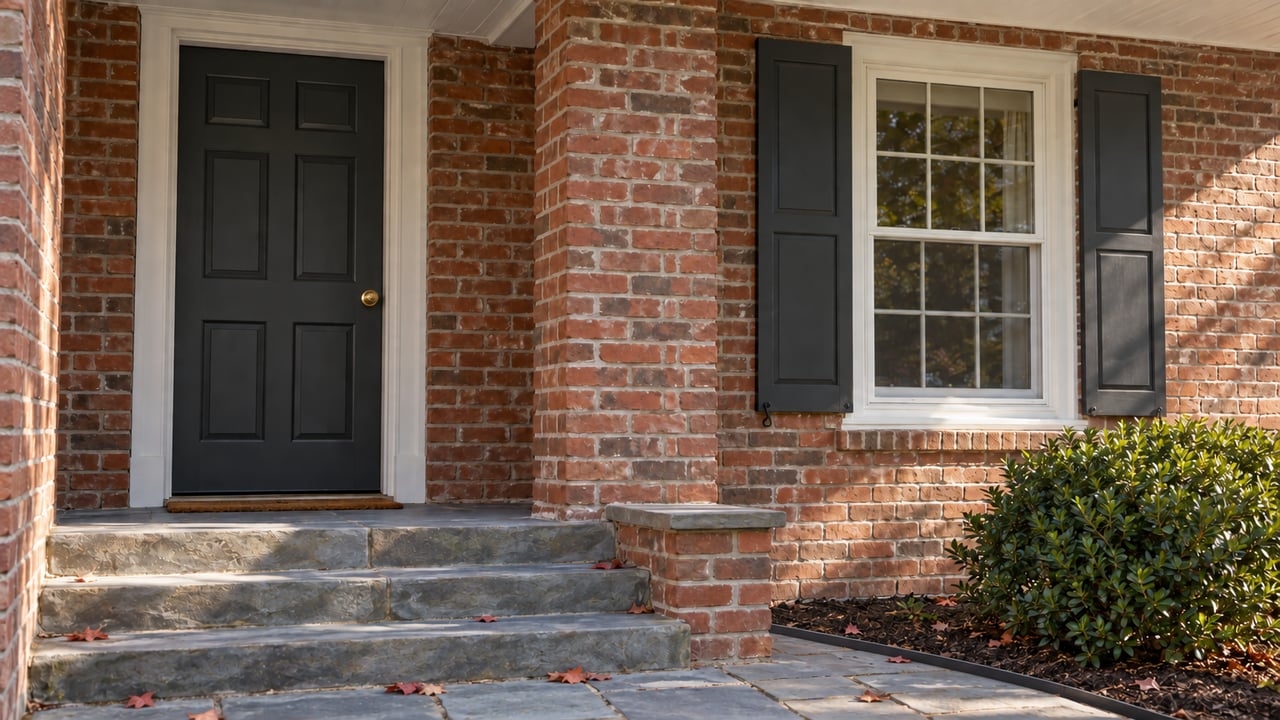
What Selling in Tredyffrin Actually Requires, and What It Doesn't
October 1, 2026
October 1, 2026
A seller preparing to list a stone farmhouse in Strafford or a colonial in Berwyn this fall might ask a friend who just closed on a house in Radnor what to expect from the township. The friend describes filing a certificate application with the township's engineering department, scheduling a sidewalk inspection, having someone check the sanitary sewer connection, and paying a fee before settlement can happen. The Tredyffrin seller braces for the same. It never comes. Tredyffrin Township does not require a residential resale certificate for the transfer of property at all.
That gap is not a loophole or an oversight. It is a real difference between two adjacent Main Line townships, and it changes what a seller should actually plan for before listing a home that has been standing since the 1700s, the 1950s, or the 1980s Chesterbrook build-out.
A municipal resale or use-and-occupancy certificate exists to let a township confirm, on its own terms, that a property is fit to change hands before the new owner takes possession. Chester County profiles of Tredyffrin's real estate rules are direct about this: the township does not separately require a residential resale certificate for the transfer of property, and it has not adopted the fire-code chimney maintenance standard that some neighboring municipalities apply at resale either. There is no township inspector walking through a Chesterbrook townhouse or a Berwyn twin before closing, checking smoke detectors or sidewalk cracks against a municipal list.
That absence matters because it means the entire burden of confirming a Tredyffrin property's condition sits with the private home inspection the buyer hires and the seller disclosure form, not with a government sign-off layered on top of them.
Radnor Township, which borders Tredyffrin directly, runs the opposite process. Current township guidance requires a Certificate of Occupancy for every residential transfer, filed by the seller with the Engineering Department at least 10 business days before settlement, with a $150 fee that rises to $300 if the filing happens inside that 10-day window. The underlying code chapter, last updated in August 2025, describes an even longer runway in the original ordinance text: applications filed no later than 30 days before settlement, or 14 days if the agreement of sale was signed less than 30 days out. Whichever timeline governs a given file, the substance of the inspection is consistent across both documents. Radnor's engineers check that smoke detectors are placed in every bedroom and on every level, that sump pumps have been disconnected from the sanitary sewer system, that the sidewalk out front has no elevation difference greater than half an inch, and that the interior sewer soil pipe has no illegal connections.
None of that is a small ask. A seller who assumes their Radnor experience will repeat itself in Tredyffrin is planning around a step that doesn't exist there, and a Tredyffrin seller who has never sold in Radnor has no reason to expect it either. The two townships share a border, a school system name recognition, and a housing stock era, but not this piece of the closing process.
This isn't a one-off quirk between these two townships. Malvern Borough, not far from Tredyffrin's western edge, requires a certificate of occupancy for every home sale, with its own fee and inspection covering the same life-safety basics: smoke and carbon monoxide alarms, safe stairs and railings, functioning heat and plumbing. Willistown Township, which shares a zip code with Malvern and sits right next to it, requires nothing at resale at all. A seller with a Malvern mailing address might actually hold a parcel in Willistown, or in East Whiteland, or in Charlestown, each with its own answer to the same question.
The pattern across Chester County is that municipal resale inspection is a local policy choice, not a statewide default. Some townships opt in and build a fee-funded inspection into every sale. Others leave the entire condition question to the private market. Tredyffrin falls into the second group.
Tredyffrin's housing stock spans an unusually wide range for one township. Communities like Strafford and Berwyn grew up around the railroad in the late 1800s, when Philadelphians began buying summer homes along the line. The township holds structures from far earlier still: the Strafford Railroad Station and several Revolutionary War-era sites sit on the National Register of Historic Places, and a National Historic Landmark, the Wharton Esherick Museum, marks the stone building the sculptor spent four decades building starting in 1926. Wilson Farm Park, opened in 2004, preserved the 90-acre Elda Farm whose original construction dates to 1836. Chesterbrook, by contrast, is a planned community that didn't exist until the 1980s.
A township with a housing stock this layered has more of exactly the kind of legacy systems that a resale certificate would never catch anyway, even where one exists. Radnor's certificate checks smoke detectors and sidewalks. It does not test for a buried heating oil tank left behind when a Strafford farmhouse converted to gas decades ago, and it does not evaluate knob-and-tube wiring behind a plaster wall in a Berwyn railroad-era home. Those checks were never part of any township's resale program, in Radnor or anywhere else in the county. They live entirely inside the private inspection period and the Pennsylvania Real Estate Seller Disclosure Law.
Pennsylvania's disclosure law requires sellers to complete a standard form covering known material defects before a contract is signed, and that obligation is identical whether the property sits in Tredyffrin, Radnor, or anywhere else in the state. The form asks directly about underground storage tanks, heating oil tanks, and known soil or water contamination. A seller who knows a tank is buried on the property and fails to disclose it can face civil liability after closing, even years later. The obligation runs only to what the seller actually knows. Pennsylvania law does not require sellers to hire a specialist or dig up the yard to find out.
That last point is where the private inspection period does the real work that a municipal certificate, where one exists, was never designed to do. If a Tredyffrin property was built before the 1970s and heated with oil at any point in its history, a buyer's strongest move is a tank sweep during the inspection contingency, before making a final offer or waiving contingencies. Mortgage lenders are frequently unwilling to fund a purchase until an underground tank is removed and the soil tested clean, and that requirement applies regardless of what any township inspector did or didn't check on the way to closing.
A seller preparing to list a Tredyffrin property this season should treat the absence of a township certificate as one less form to file, not one less thing to think about. The practical checklist shifts entirely onto two documents: the seller disclosure form and whatever the buyer's inspector and any specialist testing turn up during the contingency period. Gathering maintenance records, heating system history, and any documentation of a prior oil-to-gas conversion before listing puts a seller in a stronger position to answer a buyer's questions directly rather than reactively, mid-negotiation, after an inspector flags a fill pipe in the side yard.
If Tredyffrin doesn't require a certificate, does that mean no one inspects the house at all? No township inspector does. The buyer's private inspector still will, and that inspection plus the seller disclosure form is what stands in for the municipal check that exists in townships like Radnor or Malvern Borough.
My house has a Wayne or Paoli mailing address. Does the Tredyffrin rule apply to me? Tredyffrin includes portions of Paoli and Wayne, while the rest of each of those named areas sits in neighboring townships with their own resale rules. The mailing address doesn't determine which set of rules applies. The tax parcel and township boundary do.
Do I have to disclose an oil tank I didn't know was there? Pennsylvania's disclosure law only requires reporting what the seller actually knows. It does not require hiring an inspector to search for a tank you have no reason to suspect exists. If there's any indication one might, from old heating records to a metal fill cap in the yard, that's worth resolving before it surfaces in someone else's inspection report.
Selling a home this old, in a township with this particular set of rules, benefits from someone who has walked other Tredyffrin sellers through exactly this sequence before. Ainlay Dixon works with Main Line sellers on the disclosure and inspection details that actually decide how smoothly a closing goes, township certificate or not. Reach out before you list to get a clear read on what your specific property and its history mean for the timeline ahead.
October 1, 2026
September 24, 2026
September 17, 2026

September 10, 2026

September 3, 2026
August 27, 2026

August 20, 2026
August 13, 2026

August 6, 2026
Get assistance in determining current property value, crafting a competitive offer, writing and negotiating a contract, and much more. Contact her today.